Ok, so I got back to it. I had overfilled the oil, based on bad advice.
In order to figure that out, I picked the best day for vision in a few, and tore into it.
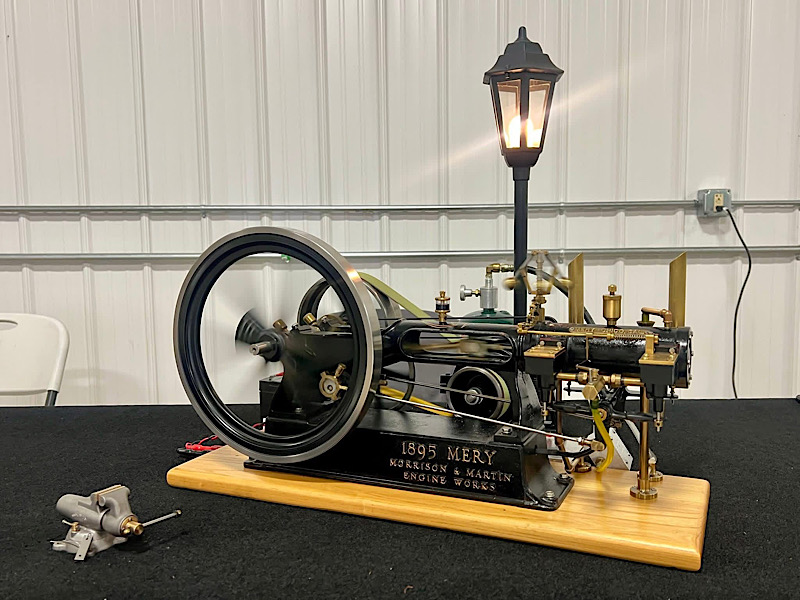
I wanted to replace the connecting rod with a spare with a properly drilled out bearing they’d sent after that fiasco. I knew I needed to do that. Removing the piston and rod can either be done through the top or bottom. The big end is a solid bushing (with oil holes), not split, so removing it means removing the flywheel, side case and crankshaft, freeing the big end from the journal. Then you either remove the oil pan and gear case, and pull the piston and rod out the bottom, or, like I did, leave the gear case and oil pan in place, remove the cylinder head assembly, and push the piston out the top. That’s what I chose to do. The reason is I didn’t want to disturb the cam and gears. So pull it out the top.
The piston uses a hard iron top ring, and a green rubber bottom oil ring. That’s just stupid. They couldn’t stick to two iron rings as ETW drew it? Argh!
In any event, I got it back together, with the exception of the drill start adapter, which failed almost immediately, spitting out needles after starting. Gotta replace the one way bearing with a real one that costs more than forty cents.
It’s been a trial, but I do expect eventually to make an engine out of it.
Note:, with as little as five cc of oil in the sump, the dipper on the con rod dips. Fifteen cc is absolute upper limit before it starts breathing oil out of bad places.
Using grease heavier than Vaseline as assembly lube on copper gaskets is a cheesy way to avoid leaks on the first run. It shows once the grease melts out on the second run. Clean, clean, clean again when using soft copper gaskets dry.


 Home
Home Search
 Today's Posts
 Login
Login Register