Thanks for your advice Bruce.
Oh yes I’ve seen the vid of the guys cranking and cranking the whippet with a flat belt on the flywheel, and the other guy squeezing the fuel tubing trying to get the engine to drink.
Here’s what I noticed immediately-
First I tried the fuel tank a couple inches above the carb. As soon as the needle valve is opened the 2-3 turns before attempting to start the engine, fuel immediately will drip-drip-drip out of the compensating hole on the needle valve inlet T
Next, I tried the fuel tank just slightly below the carb. This allowed me to open the needle valve and not have the constant fuel drip from the compensating hole.
I primed the engine by opening the throttle, covering the carb inlet & rotating the flywheel. A few pulls later and didn’t pop or try, so I lifted the fuel tank above the carb, watched for a fuel drip and tried starting again, and at best only got a tiny pop or two… no actual attempts to really try to run though,
I saw an old article in model engine news about a guy making / machining a whippet, and he mentions the compensating hole, or as I was calling it, a “weep hole”
Tomorrow I’ll try and set the timing adjustment arm to dead center with the cylinder, and see if that helps. Pretty sure I tried that position first.
If I attach the ignition & battery, remove the spark plug and rotate the flywheel, the spark plug sparks when laying on a towel, ungrounded.
I just wondered if maybe the plug may not be firing when it’s grounded aka installed in the cylinder head… I wouldn’t think that would cause it not to fire, but ignition isn’t something I know a lot about… lol.
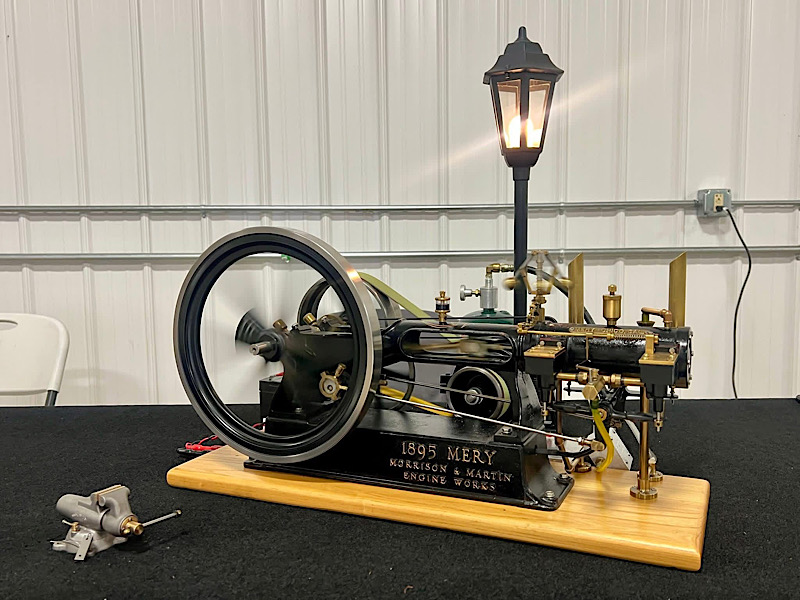
My black V2 arrived recently and I’m gonna have to build another base similar to the base I made for my silver V2. I just made the base part, not the aluminum engine pedestal or fuel tank, I asked George Britnell to make those parts for me
Thanks again for helping me try to figure out getting my Whippet started.
-j.


 Home
Home Search
 Today's Posts
 Login
Login Register